
Written by Dr. Stavros Athanasiou
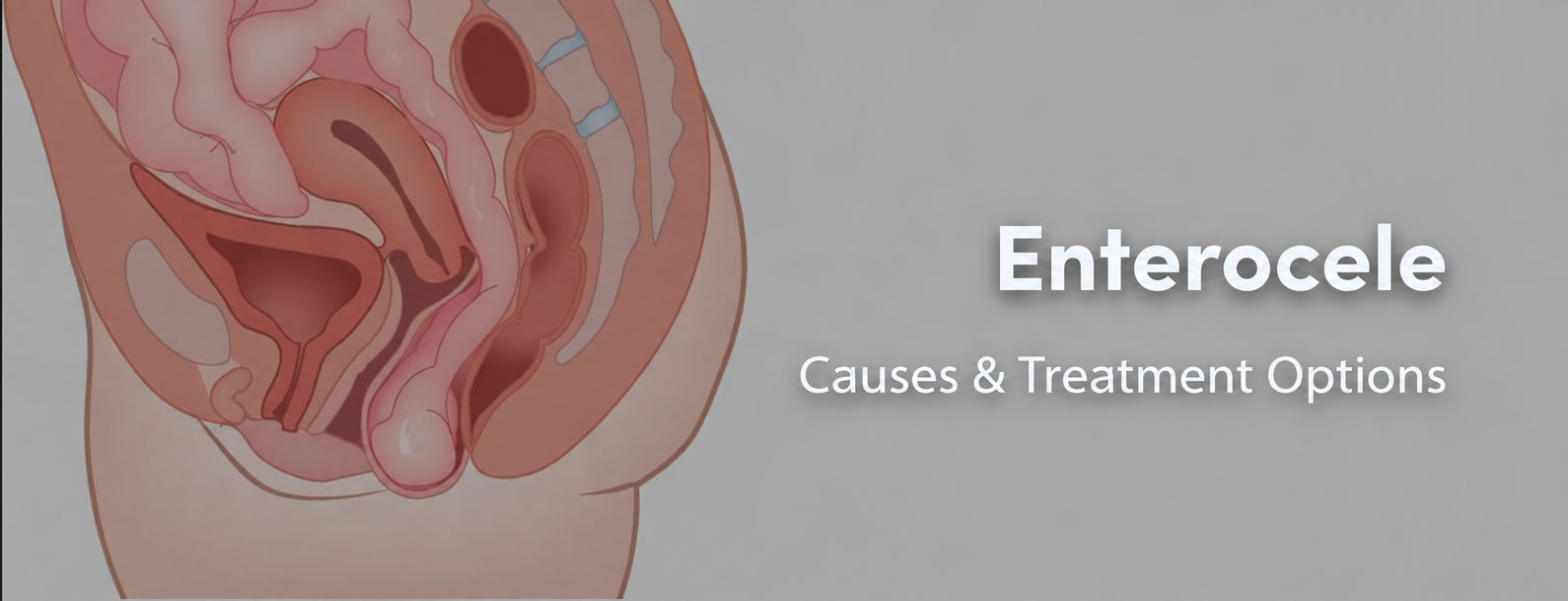
An enterocele is a form of pelvic organ prolapse affecting the vagina. It is a hernia that develops in the upper third of the posterior vaginal wall, through which loops of the small intestine protrude. This creates a bulge in the upper part of the vagina.

This condition commonly occurs in women who have previously undergone a hysterectomy.

Causes of Enterocele
Several factors may contribute to the development of an enterocele. The most common causes include:
- Heredity: Genetic predisposition may play an important role in the development of an enterocele, as well as other forms of pelvic organ prolapse, such as uterine prolapse, cystocele and rectocele.
- Childbirth: Vaginal delivery can place pressure on and cause minor injuries to the pelvic floor structures, potentially contributing to the development of an enterocele later in life.
- Chronically Increased Intra-Abdominal Pressure: An enterocele may develop as a result of repeated strain on the pelvic floor structures from heavy physical work, chronic constipation, obesity, chronic coughing and other factors.
- Menopause: When the ovaries stop producing the hormones that regulate the menstrual cycle, the pelvic floor muscles and vaginal tissues may weaken, increasing the risk of an enterocele.
Diagnosis of Enterocele
An enterocele is usually diagnosed based on symptoms and a clinical examination. It may sometimes be mistaken for a rectocele, particularly if the examining doctor is unfamiliar with the condition.
Additional tests, such as an ultrasound scan, may be needed to confirm the diagnosis.
Meet Your Doctor
Expertise That Inspires Confidence.
Dr Stavros Athanasiou
Specialisation in Urogynaecology, training at King’s College Hospital and international scientific activity. Discover his career and work.

Treatment of Enterocele
Treatment options for an enterocele may vary depending on the type, size and symptoms of the hernia. The main approaches include conservative management and surgical treatment. Let’s take a closer look at each of these treatment options:
Conservative Management
- Vaginal Pessaries: These are specially designed silicone rings inserted into the vagina to support the area affected by prolapse. Vaginal pessaries are often used when a patient wishes to avoid surgery or has medical conditions that increase the risks associated with an operation.
- Kegel Exercises: Kegel exercises strengthen the pelvic floor muscles and may help support the pelvic organs and manage symptoms of an enterocele.
- Symptom Management: If the enterocele is small and causes no symptoms, management may involve simple lifestyle changes, such as avoiding heavy lifting that increases abdominal pressure and may worsen symptoms.
Surgical Treatment
- Vaginal Surgery Without Mesh: Vaginal repair is a commonly used surgical treatment for an enterocele. During the procedure, which may be performed under local anaesthesia, the surgeon returns the protruding portion of the intestine to the abdominal cavity and reinforces the vaginal wall and pelvic floor with specialised sutures. In many cases, the use of surgical mesh can be avoided.
- Laparoscopic Repair: In certain cases, an enterocele is repaired laparoscopically, often using surgical mesh.
The choice of treatment depends on several factors, including the type and size of the enterocele, the patient’s symptoms and overall health, and, particularly, the gynaecologist’s experience.
Take the next step towards managing your enterocele. Contact the doctor for personalised guidance on the most suitable treatment for you.
Prevention of Enterocele
Taking steps to reduce your risk of an enterocele can help protect your pelvic floor health and may reduce the need for surgery. Although several factors can contribute to its development, including genetic predisposition, physical strain and previous surgery, there are measures you can take to lower your risk. Here are some practical tips to help prevent an enterocele:
- Maintain a Healthy Weight: Obesity and excess weight can increase pressure within the abdomen and contribute to the development of an enterocele. Maintaining a healthy weight through diet and exercise is important.
- Follow a Balanced Diet: A diet rich in fruit, vegetables and fibre, along with adequate water intake, can help maintain digestive health. Avoiding excessive consumption of alcohol, caffeine and added sugars is also important.
- Avoid Excessive Strain: Help reduce your risk of an enterocele by avoiding excessive physical strain. Pay particular attention to how you lift heavy objects and use proper techniques when exercising at the gym.
- Use Proper Breathing Techniques: Appropriate breathing techniques can help manage abdominal pressure. Learn and apply these techniques during activities that increase pressure within the abdomen, such as exercise.
- Stop Smoking: Smoking can contribute to the risk of an enterocele by causing chronic coughing, which repeatedly increases abdominal pressure and strains the pelvic floor.
Conclusion
An enterocele is a common condition that requires careful assessment for accurate diagnosis and appropriate treatment. It may sometimes be mistaken for a rectocele, potentially leading to ineffective treatment.